The Near-Miss Fallacy: Why an Almost-Win Is Not a Signal
The near-miss fallacy makes an almost-win feel informative. Learn how to distinguish a close-looking result from a real change in game state before deciding what to do.
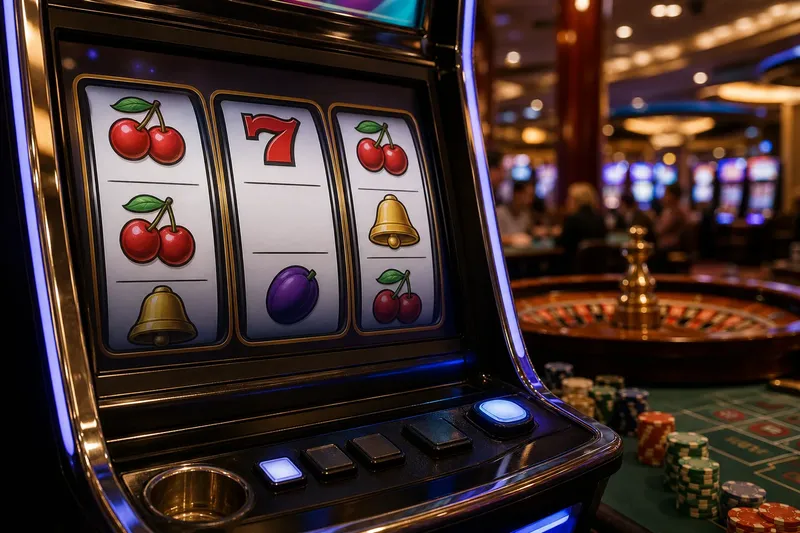
Did the last spin stop just one symbol short of a jackpot? The near-miss fallacy is the mistaken idea that this almost-win makes a win more likely next time. A close-looking result can stir hope, but by itself it says nothing about what comes next.
That distinction matters whether you are watching a slot screen, a ball pass a roulette pocket, or a card land just shy of a desired hand. The sensible response depends on what produced the outcome: an independent random event, a changing game state, or a display designed to make results easy to read. Start by sorting out which situation you are in.
Independent random outcomes do not carry a near miss forward
In a game built around independent random outcomes, the current result does not remember the last one. If a slot display shows two matching symbols and a different symbol on the remaining reel, that visual closeness does not move the next spin toward a match. The next outcome is not trying to complete the picture.
Think of tossing a coin onto a table. A toss that lands close to the table’s edge does not steer the next toss toward the opposite side. The earlier toss is like a snapshot: its position says what happened, not what the next toss will do.
This is the clearest case for ignoring an almost-win as evidence. It may feel emotionally significant because the result resembles a prize, but resemblance is not a mechanism. A screen’s symbols can invite a story—“I was nearly there, so I’m due”—without providing information about the next outcome.
Say you see two matching fruit symbols and a blank between them, then consider playing again because the display looks close. In this invented situation, each spin is independent. The blank does not indicate that a matching symbol is more likely on the next spin; the observable result is simply another outcome, not a continuation of the picture.
A changing game state matters only through its rules
Not every game is a sequence of identical, isolated events. In some card games, cards already dealt affect which cards remain available. In a game with a visible round or shared board, earlier actions can change the options or information present in the current state. Here, a previous event may matter—but not because it looked close to a win.
Separate two questions: “What changed in the game?” and “Did the last result look almost successful?” The first can matter if rules or available information connect it to the next outcome. The second, on its own, does not establish such a connection. A near miss describes appearance; it is not a rule.
If you cannot identify a specific mechanism that links earlier events to the next one, do not treat the near miss as useful evidence. In a card game, known cards may matter to the remaining possibilities, while a hand that was one card short of a desired combination does not itself cause the next hand to improve. The actual game structure, not the feeling of unfinished business, is what matters.
Displays can make a result look closer than it is
Casino games communicate through symbols, lights, sounds, and motion. A row of nearly matching symbols is easy to understand at a glance. That clarity can make the result feel more consequential than an ordinary loss, even though the screen’s arrangement does not by itself reveal the next result.
Look at what the display can and cannot tell you. It can show the outcome that has already happened, explain a prize pattern, or signal that a feature has been activated. It cannot, merely by arranging symbols to look almost complete, tell you that the next independent result is more favorable.
Ask whether the game’s rules describe a feature that carries into another turn. A displayed meter, bonus state, or other explicit game condition may matter if the rules say it changes what can happen. That is different from reading ordinary near-miss imagery as a hint. If you are unsure what a feature does, check its stated rules rather than infer a hidden promise from the animation.
Pause when an almost-win creates an urge to continue
For some people, an almost-win creates a strong urge to play again: the next attempt seems as though it should finish what the last one started. That urge is a feeling, not evidence. You do not need to settle the odds in your head before stepping away; you can simply decline to use a close-looking result as a reason to continue.
If you choose to gamble, decide on a personal limit before playing and use it as a stopping point, not as a target you must reach. If you notice yourself raising that limit after a near miss, chasing losses, or playing longer than you meant to, pause and consider leaving the game. For concerns about gambling becoming difficult to control, a qualified counselor or local support service can help you think through next steps.
- If a slot display nearly matches: observe that the spin has ended; treat it as no forecast, and decide whether you would still play without the near miss.
- If known cards or another game detail carries forward: check which information the rules say remains relevant; use that information, or disregard the earlier result if no rule connects it to future possibilities.
- If a feature meter or bonus state appears: read the stated rules; if they explain a change to the game, consider that condition, and if they do not, do not infer one from the animation.
- If an outcome only looks almost complete: check whether any rule makes it carry forward; if none does, treat it as a finished result, or ask a staff member to clarify the rules before deciding.
- If you feel an urge to play again: pause and ask whether you would make the same choice without the near miss; if not, step away, or return to your pre-set limit before making any decision.
- If play feels hard to stop: notice whether you are exceeding the limit you set; if you are, leave the game and contact a qualified counselor or local support service if you need help.
What can a near miss tell you?
Does a near miss mean a win is due?
No. A result that looks close does not make an independent next result more likely to be a win. The feeling that a sequence is “due” is not a signal from the game.
Can a near miss predict the next slot spin?
Not on its own. A matching-looking display describes the spin that has already ended; it does not provide information about the next one unless a stated game feature explicitly connects them.
Can earlier outcomes ever affect what comes next?
They can matter when the rules or known game state connect them to future possibilities, as with information about cards already dealt. That connection comes from the game’s structure, not from an earlier outcome being almost a win.
Why can an almost-win feel more important than an ordinary loss?
It resembles a successful result and can invite the mind to imagine the small change that might have completed it. That sense of closeness can sharpen emotion without adding predictive information.
Choose based on rules and personal limits
The near-miss fallacy turns a past outcome into a story about the next one. With independent outcomes, the story has no basis in the result you just saw. When game information carries forward, identify the actual rule or state change that matters instead.
So when a display seems one symbol, card, or position away from a win, ask what changed in the game—not how close the loss felt. If nothing in the rules connects that result to the next one, the near-miss fallacy is not a reason to continue. Before deciding, check that the choice fits the limit you set; if it does not, step away rather than letting the display make the decision for you.